Skip to content

The Sierra de Guara is a region steeped in legend, with tales of witches, sleeping giants, warriors who achieved remarkable feats, the legend of the ‘Santa Craba’ or that of the Grandmothers of Sebil, among hundreds of other stories… Are they true?
For in this land, criss-crossed by the waters of Europe’s most spectacular gorges, the devil has bridges and there is a woman so strong that she walks about with a huge slab on her head. I invite you to discover some of these legends, starting here, but don’t forget that life tastes better when experienced first-hand.
A land where history and legend intertwine
We have mentioned here on previous occasions that the first human settlements in the Sierra de Guara date back tens of thousands of years. And although many villages, hamlets and settlements were abandoned in the 1960s, this is possibly one of the places in the world where there has been an uninterrupted human presence for the longest period of time.
In a place like this, it is normal for history and legends to become intertwined, to the point where we cannot scientifically be certain what happened and what did not, what is the product of the imagination and what stories were lived by the inhabitants of Guara in those days. A rugged landscape, scattered settlements, immense rock walls, rivers that carve their way through the land and traditions that run deep roots in the night of the ages.
The Sleeping Giant of Guara
From the southern face of the range—in Huesca, to be precise—the view of the Sierra de Guara is breathtaking. It is undoubtedly a giant, and in times when human passions were attributed to mountains, it was said that Gratal and Gabardiella were two lovers deeply in love, despite the opposition of Gabardón, Gabardiella’s father. Gabardón forbade them from being together again, but like true lovers, they disobeyed him.
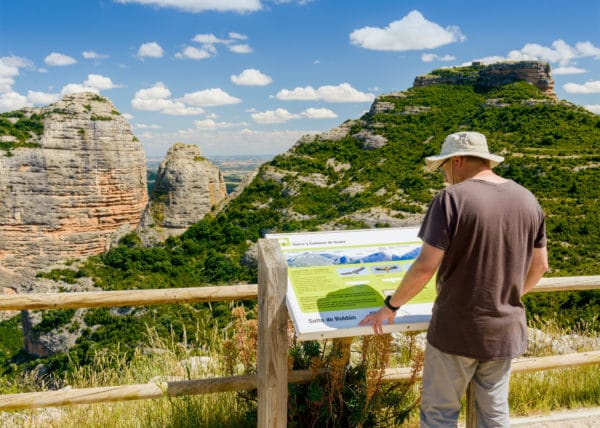
So Gabardiella’s father asked Guara for help, and with his enormous staff he split the mountain in two, causing the River Flumen to flow through the huge chasm and creating what we now know as Salto de Roldán.
Gratal was so enraged that one night, whilst Guara slept, he plunged his sharp horn into his heart, and there Guara lay, dead in the position we can still see today.
The Legend of Roldán’s Leap
The legend of the knight Roland, set in the very spot where the giant Guara was split in two by his sword, has been the subject of much discussion. Indeed, at first glance, the mountains themselves have served as a source of inspiration for generations upon generations of inhabitants of the Sierra de Guara and the surrounding area, enabling them to pass on these stories in times when there was no television, no internet, and nothing else to provide entertainment on dark winter nights.
In the links section, I’ve included a description of the Salto de Roldán waterfall in case you fancy having a look.
Witches and superstitions in the Sierra de Guara
Megalithic monuments have always captured the imagination of the people of Guara. Who placed those stones there? What were they used for? One such site is the Ibirque dolmen, which is also known locally as the ‘Witches’ Hut’ because of its shape, with three side walls and a large slab serving as a roof.
It is common in this land of shepherds that, when it rained heavily, many would seek shelter from the rain by going inside these megaliths. But who in their right mind would go into a witch’s dark hut? Not me, that’s for sure.
Just ask the cart driver from Las Almunias, who made his living transporting goods between villages; one summer’s day, night fell whilst he was on the road and he had to sleep in his cart, only to find himself surrounded by witches and warlocks who worshipped the devil himself and kissed his arse as a sign of submission.
Dolmens, caves and legends of the Moors
Another dolmen, that of Losa Mora, is also the subject of a legend which tells how a Moorish king and his Christian lover were shot dead by Muslim soldiers whilst fleeing to be together.

Also linked to the presence of those known in the area and at the time as ‘Moors’, it is said that on nights when the river was in flood, in the Mascún ravine, one could hear the cries of the Muslims who had perished on these cliffs.
The Centre for the Interpretation of Legends and Traditions
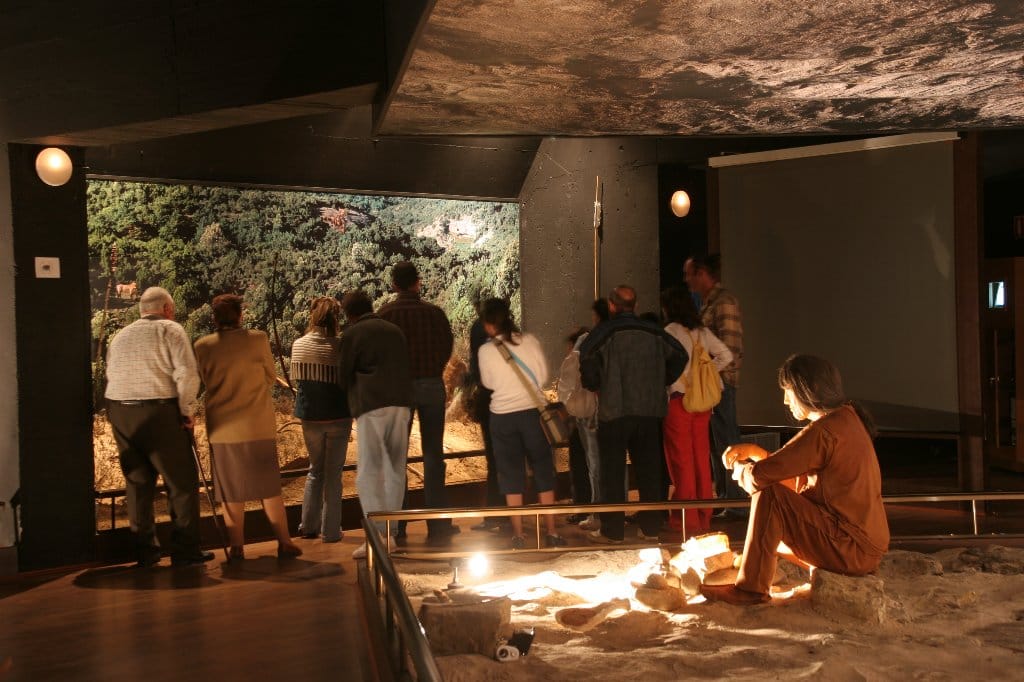
The Centre for the Interpretation of Legends and Traditions is located in Adahuesca. It is only open during the high season, but there you can gain a wonderful insight into the region’s most traditional culture, myths, rituals and traditions. You can also meet the Grandmothers of Sebil.
It is said that these grandmothers were the only survivors of the Black Death in their village, and they have played a vital role in the history of Adahuesca right up to the present day. At this visitor centre, you will also learn about mythical creatures, beliefs and religious rituals that take place in the heart of the Sierra y los Cañones de Guara Natural Park.
Discover the legends of Guara on the ground
We’d love to hear your amazing stories from the Sierra y los Cañones de Guara Natural Park if you use our hashtag #viveguara.
LINKS
The Reclining or Dead Man of Guara: https://turismo.hoyadehuesca.es/tu-cuentas-mucho/blog/1288-leyendas-del-prepirineo-el-hombre-tumbado-o-muerto-de-guara
The Legend of Roldán’s Leap: