Skip to content

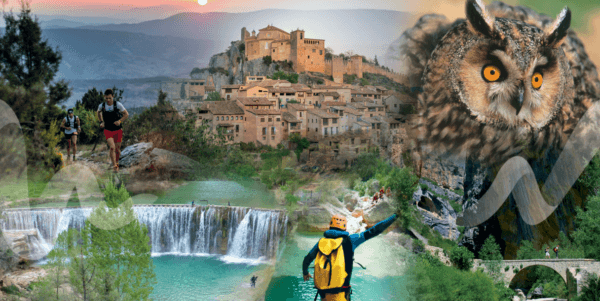
The treasures of the Sierra de Guara are almost endless, but two stand out in particular: one is well known for having made the Sierra y los Cañones de Guara Natural Park a world-renowned destination for canyoning. We are in one of the world’s leading locations for this activity, offering a huge variety of options for all levels of ability.
Another key aspect that makes the Sierra de Guara such a special place is its history, its villages, and the way in which the passage of time and social changes have left very visible traces of a past that is recent in terms of years but feels very distant when we consider the way of life of the area’s former inhabitants.
The Sierra de Guara, a land of contrasts
Where, just a few years ago, there were self-sufficient villages with their own bread ovens, farmland, livestock and families living much as they had for centuries, today we find the ruins of those buildings, which we gaze upon with a mixture of melancholy and curiosity about what life was like back then. These places have become tourist attractions, so now that the warm weather is here, why not combine a visit to these villages with a descent down a ravine? Or with a refreshing dip in a picturesque pool, if you prefer something a bit more peaceful.
We’ve put together four routes taking you through deserted villages, ravines and natural pools; five options to suit all tastes, whether you enjoy cycling, walking, running or simply want to relax in a place steeped in history.
Otín and the Mascún ravine: a must-see route
Otín is one of the best-known abandoned villages in the Sierra de Guara, not only because of its location near Rodellar but also because it lies on the route to the Mascún Gorge, one of the landmarks of the Sierra y los Cañones de Guara Natural Park. Otín, which currently belongs to the municipality of Bierge, is situated on a plateau at an altitude of just over 1,000 metres.
The lack of transport links and services meant that this place became deserted in the 1960s. At the start of the decade, there were 19 people living there, making it one of the larger villages in an area where it was common to find settlements with no more than seven or eight houses.
Today, we can only imagine what life was like there – much harder than the idyllic setting would suggest. The usual route for visiting Otín starts in Rodellar, takes in the Losa Mora dolmen and the ‘delfín’, and passes through the abandoned village of Nasarre and the Mascún ravine.
If you decide to tackle the route, you won’t be disappointed, although bear in mind that it’s a 16-kilometre walk that requires you to be in good physical shape. Here’s a link to our ‘Pueblos de Leyenda’ route: https://guara.org/entorno/senderos/ruta-pueblos-de-leyenda/
Nasarre and the adventure to Gorgas Negras
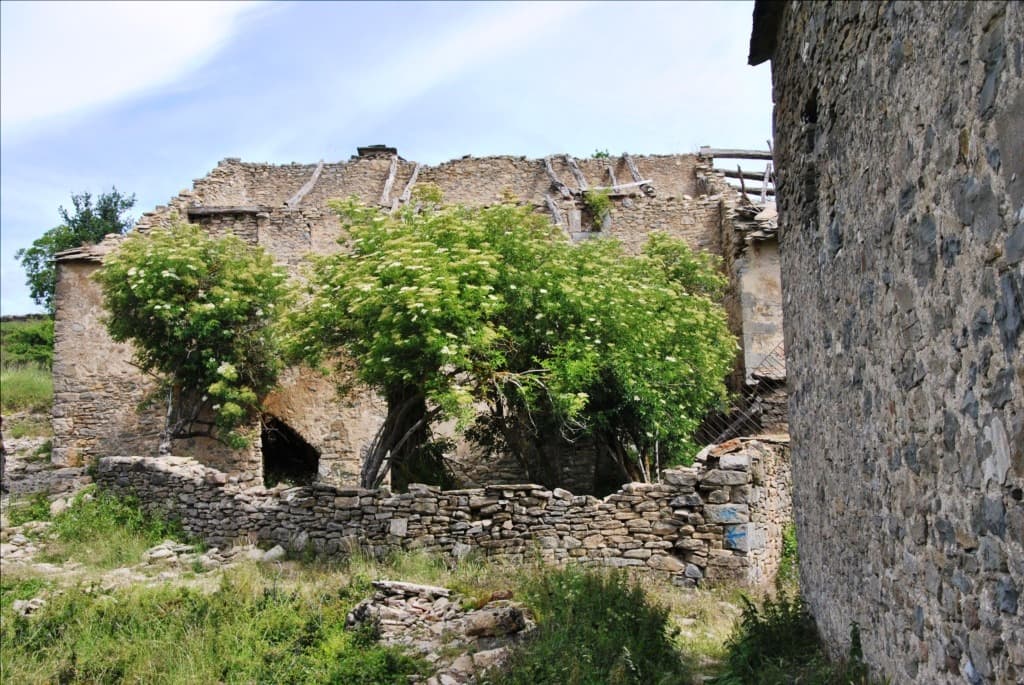
Nasarre is another of the iconic abandoned villages in the Sierra de Guara. Like Otín, its last inhabitants left in the 1960s. It lies at an altitude of almost 1,200 metres and, in addition to the route mentioned above—one of the best-known in the Sierra y los Cañones de Guara Natural Park—it is also situated on the approach to the Gorgas Negras ravine.
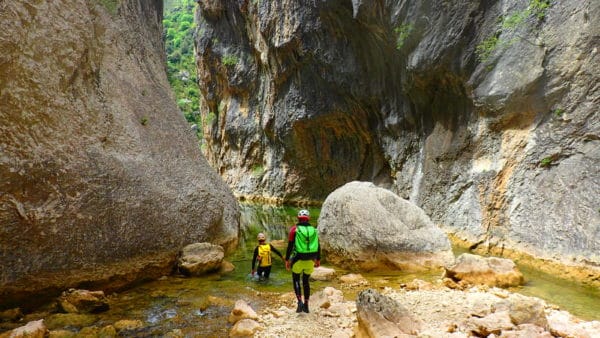
Before proceeding with the itinerary, if you are considering tackling the Gorgas Negras gorge, it is essential that you do so with professional guides. This is the longest gorge in the entire Sierra de Guara and is only suitable for professionals or very experienced canyoneers accompanied by a guide. The canyon, including the approach and return to Rodellar, will take you around 12 hours, so there is a risk of hypothermia during the descent and you will need provisions for the long day.
That said, reaching the ravine via Nasarre is quite an experience: a roughly three-hour hike that starts in Rodellar, passes by the Mascún spring and the Andrebot ravine, and—as with the previous route—the Losa Mora dolmen.
If you’re staying in Nasarre because the Gorgas Negras ravine is a bit too much for you, take a look at this route from Turismo Somontano: LINK https://turismosomontano.es/es/rodellar/pueblos/nasarre
Here is the route recommended EXCLUSIVELY for exploring the gorge with guides: LINK https://turismosomontano.es/es/rodellar/aventura/descenso-de-barrancos/gorgas-negras
Pools and deserted villages from Nocito
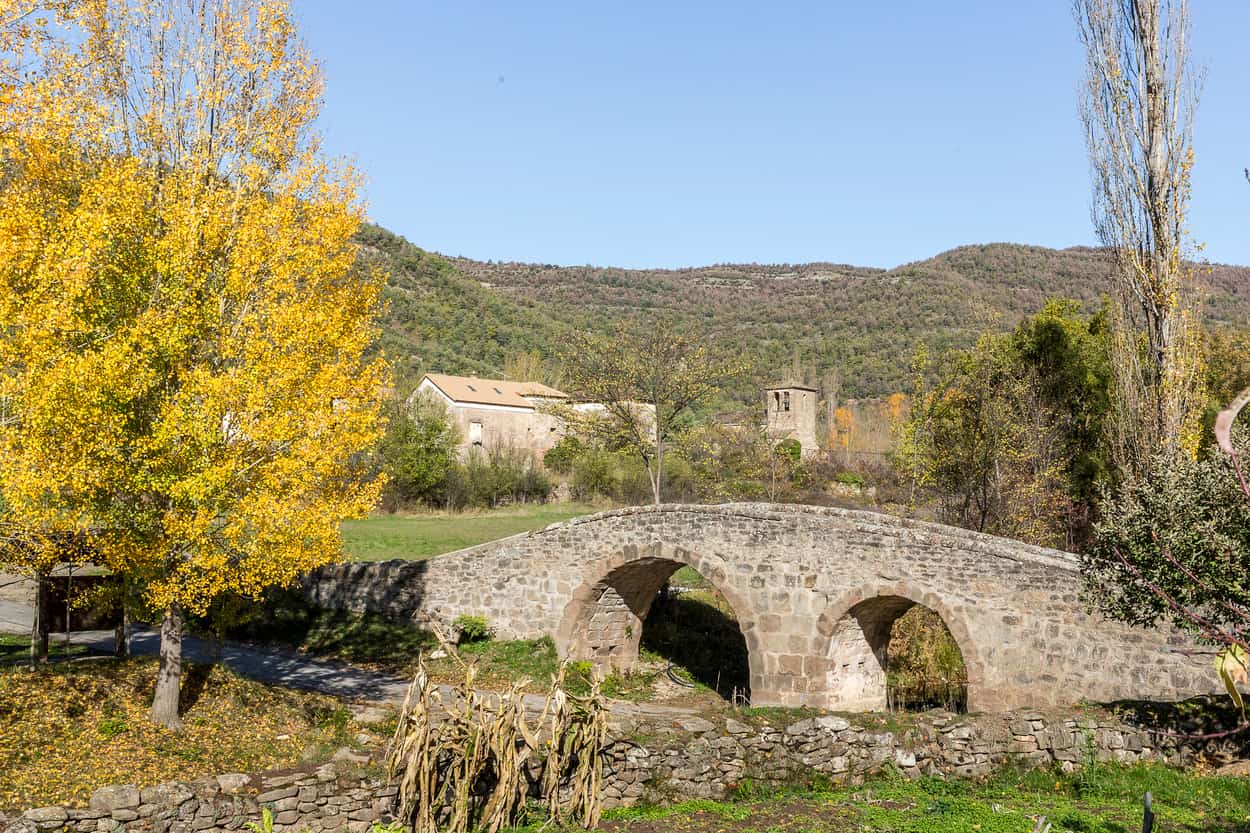
If you love the water but prefer a much more peaceful experience, and you want to discover picture-perfect villages and enjoy a long day of water and trails in peace and quiet, this is the perfect option for you. This time, we’ll be setting off from Nocito, on the north face of Tozal de Guara (2,077 metres), our highest mountain.
Nocito remains inhabited and full of life, despite having only 28 registered residents. Shortly after setting off, we come to the first ravine and a potential spot for a refreshing break: the La Pillera ravine. After the first stop, we’ll set off to explore the abandoned village of Used, passing through Bentué de Nocito, which has been repopulated since the start of this century; we’ll also visit the abandoned villages of Azpe and Abellada, which haven’t been as fortunate as Bentué de Nocito but do have ravines with spectacular pools where you can cool off again.
A total of 16 kilometres to enjoy the history, legends and the very best the Sierra de Guara has to offer. Here’s our suggested route. LINK https://guara.org/entorno/senderos/barranco-de-la-pillera-nocito/ Fancy giving it a go?
Bara, Miz and Bibán: abandoned villages and natural pools by bike
Cyclists, this route is for you too, although if you fancy a walk, you can also enjoy the route we suggest. We are in an area – the Alcanadre river valley – which is home to the highest concentration of abandoned villages in the entire Sierra de Guara. We set off from Bara, one of the few exceptions to this trend of depopulation.
Our first stop will be in Miz, a prime example of the abandoned villages in this area. Miz, which was abandoned in 1963, had just two houses and relied on the surrounding villages to take the children to school and to access a doctor or a priest. These were scattered settlements, yet they were closely linked by the footpaths that we now walk along purely for pleasure.
We’ll continue towards Alastrué, which once had its own town hall in the 19th century and now lies forgotten in the middle of nowhere. From there we head to Bibán, where we’ll follow the Alcanadre river and reach the area of natural pools, where water will no longer be a problem, as there’s a spring between Bibán and Bara.
The route, just over 16 kilometres long, could be extended to 23 kilometres if, at Alastrué, we take a detour to the abandoned village of Matidero, very close to the source of the River Alcanadre.
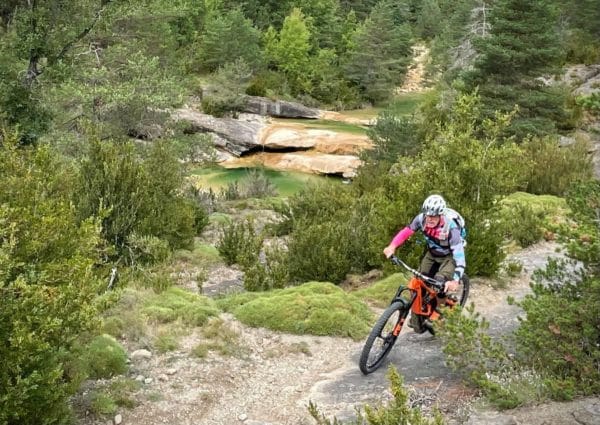
If you fancy giving this cycle route a go (which you can do on foot if you’re fit enough), here’s a link to our cycling website, BGuara, where you’ll find this and other equally amazing routes. https://bguara.com/ruta/enduro/senderos-del-alcanadre/
Tips for exploring the countryside safely
If you’re thinking of trying out any of our suggestions, remember to call on the best professionals to ensure you have an unbeatable experience: LINK https://guara.org/establecimientos/turismo-activo/
Safety is paramount when undertaking any activity in the great outdoors, which is why we are also part of the Montaña Segura network of volunteer safety officers. If you know the area and would like to help reduce the number of accidents, or if you have any questions about safety in the great outdoors, please do take a look at the Montaña Segura website: LINK https://montanasegura.com/pertenecer-a-la-riv/
Discover the abandoned villages of the Sierra de Guara
Do you know of any other ideas you’d like to share with us? If you’ve tried any of ours, do let us know – we’d love to hear that you’re enjoying the Sierra y los Cañones de Guara Natural Park.