Skip to content
Why the Sierra de Guara is a unique destination for birdwatching
The Sierra Natural Park and the Guara Canyons are a real gem for birdwatching. If one had to single out one aspect above all others among the world’s protected areas, it would be the opportunity to observe birds of prey and scavengers. We have devoted a great deal of space to discussing ornithology from various perspectives: a comprehensive general article which you can read here: https://guara.org/actividades/ornitologia/ or this other, more recent one, focusing on ‘birdwatching’ and the birdwatching routes https://guara.org/descubre-guara/aves-rapaces-y-rutas-ornitologicas/ .
There are countless opportunities, and many people ask how to get started, what to do, what to look for and where to look amidst so many possibilities. We’re in the perfect place for stargazing, and we also have spots from which to watch vultures soaring overhead. So pay close attention if you’ve ever felt at a loss as to where to begin with birdwatching – we’re going to unravel its secrets.
Facilities and accessibility for birdwatching in Guara
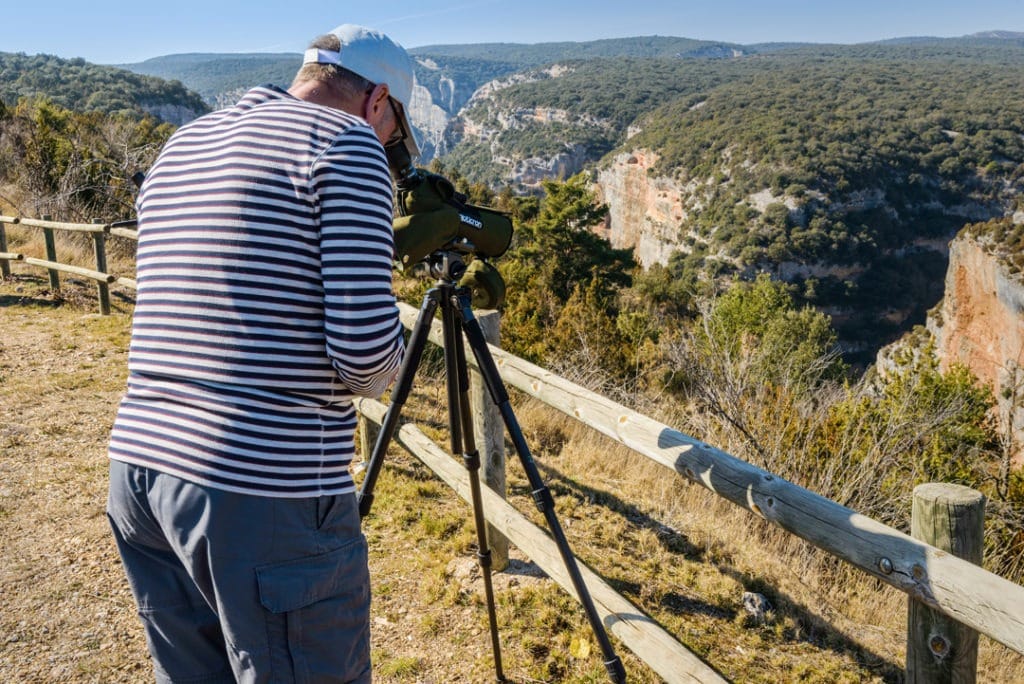
It’s worth noting that you don’t need to be a seasoned hiker to reach the best spots. The Sierra y los Cañones de Guara Natural Park is equipped with facilities designed to facilitate birdwatching, including viewing points accessible to people with reduced mobility.
The Salto de Roldán viewpoint
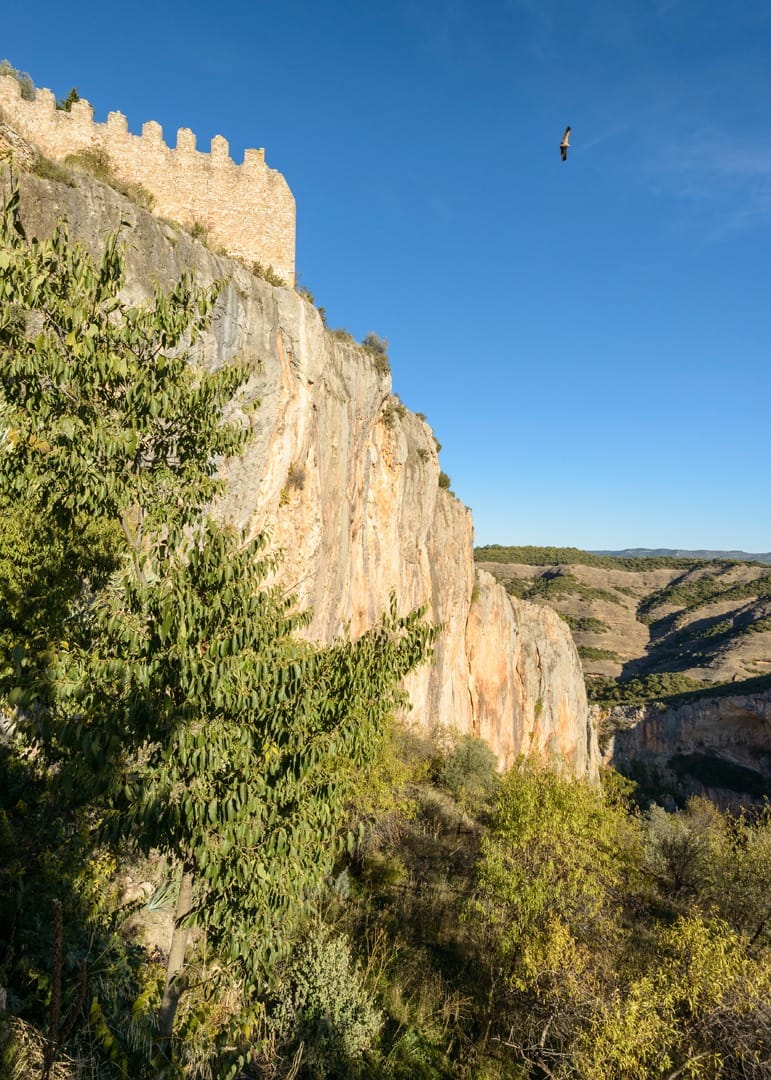
One of the highlights is the Salto de Roldán viewpoint, from where you can enjoy spectacular views and, with a bit of luck, spot some of the many species of birds of prey that inhabit the mountains, mainly the griffon vulture. In fact, from the car park itself, you’ll be able to see the vultures flying below you. An absolutely breathtaking experience.
The best birdwatching routes in the Sierra de Guara
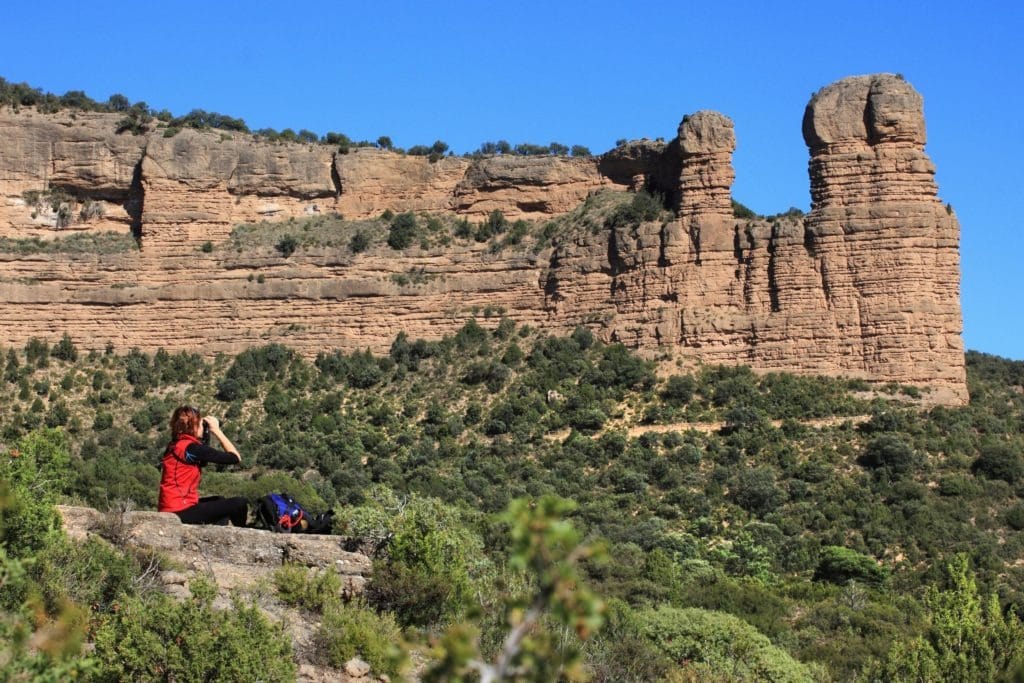
Among the most appealing routes for birdwatchers is the north face of Tozal de Guara, a place where time seems to have stood still and nature thrives undisturbed by human interference. Here, the silence is broken only by birdsong and the wind rustling through the trees. Grab your binoculars, water, food and a chair, and settle down to wait; it won’t be long before you’re gazing at these flying treasures.
Another unmissable route is the one leading to San Martín Bal d’Onsera, a trail of moderate difficulty though with a steep gradient that offers excellent opportunities to observe birds of prey up close, particularly on clear, calm days. Griffon vultures are the main attraction, but you’re also likely to spot bearded vultures and Egyptian vultures, which are less common but still easy to come across. As the bearded vulture is a migratory bird, the best time to see it is when the weather improves.
Tips for getting started with birdwatching
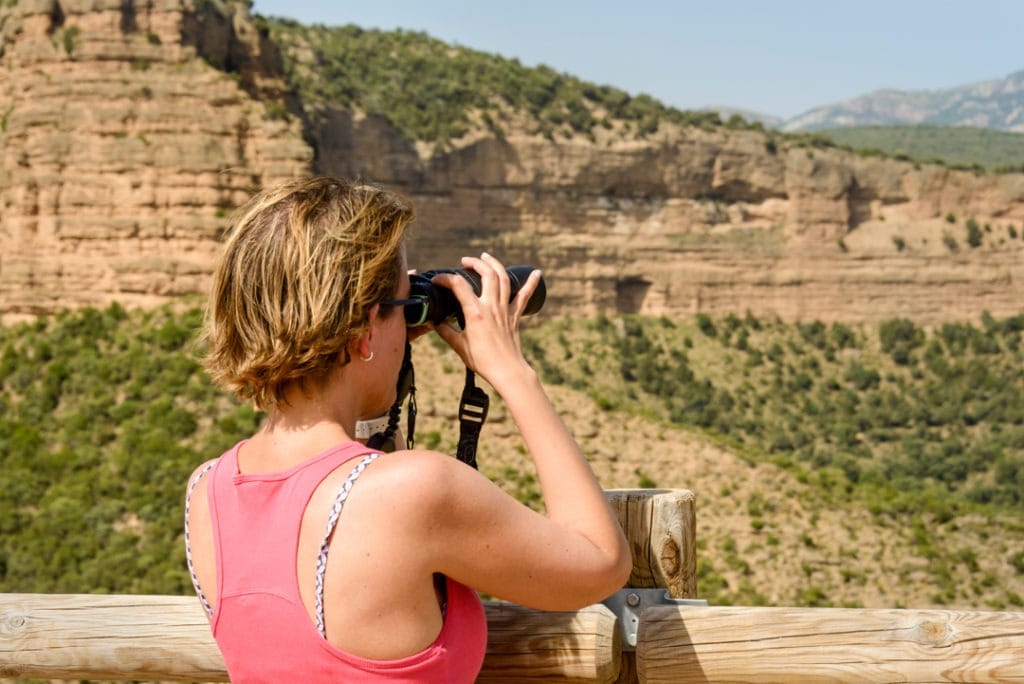
To get the most out of your ‘birdwatching’ experience, it is essential to bring a good-quality pair of binoculars (8x or 10x magnification is a good balance) and a field guide to help identify the species. Patience is a virtue in this activity: finding and observing birds in their natural habitat requires time and silence. It is advisable to wear neutral-coloured clothing that blends in with the surroundings and to bring water and light snacks for longer walks. As for the rest of the necessary equipment, here is a short list to ensure you have everything you need.
What equipment to take for birdwatching
The equipment required for a successful birdwatching experience in the Sierra de Guara must be carefully selected to ensure comfort, efficiency and respect for the environment. Here is a list of the essentials:
- A bird guide to Spain, or specifically to Aragón, can be very useful for identifying the species you come across. You enjoy what you know so much more.
- Your clothing should be comfortable, suitable for the weather and preferably in neutral colours so as not to attract the attention of birds. In mountainous areas, layering is ideal, as temperatures can change rapidly. And remember, you’re heading out into the countryside, not to a museum, so don’t skimp on ‘just-in-case’ items.
- Good footwear: the terrain in the Sierra can be uneven and rocky. We recommend hiking boots with good support and grip.
- A cap, sunglasses and sun cream are essential for protecting yourself from the sun during long hours of stargazing. And don’t be fooled if you see a few clouds or feel a cool breeze in summer – the biggest surprises in the form of sunburn tend to happen on days like these.
- A good rucksack to carry everything you need comfortably, including water, food, the field guide and any other equipment. You might not be doing much walking, but you’ll be spending quite a bit of time in the countryside.
- A camera (a mobile phone camera won’t do). For those interested in bird photography, a camera with a good telephoto lens can capture details without disturbing the birds.
- A notebook and a pencil or pen for taking notes on the species you spot, interesting behaviours or any other relevant details.
- Mobile apps can replace a field guide. There are apps that can help you identify birds by their song or by photos. Birdnet is brilliant, but there are plenty more.
- It’s essential to bring plenty of snacks and water, especially on long walks or on hot days. Or to help pass the time if the birds are slow to appear.
- We should always take a GPS or a map of the area with us on our trips into the countryside, even if we don’t always remember to do so.
The ethics of birdwatching in Guara.
Birdwatching should be practised with respect for nature and the creatures that inhabit it. Always keep a safe distance from nests and avoid making loud noises or sudden movements that might disturb the birds. It is important to remember that we are in their home and must be considerate visitors.
Services and meeting points for birdwatchers
Guara is full of specialist accommodation, has excellent nature guides and offers an unrivalled setting. Here’s a brief overview, and at the end I’ll share the leaflet produced by the Birding Aragón project for the Sierra y los Cañones de Guara Natural Park, where you can find all the resources available in the area.
Accommodation specialising in birdwatching
- Hostería de Guara, in Bierge: https://www.hosteriadeguara.com/
- Casa Atuel, in Bierge: https://casaatuel.com/
- Albergue Las Almunias, in Rodellar: https://www.alberguelasalmunias.com/
- Apartahotel Valle de Rodellar, in Rodellar: https://www.vallederodellar.com/
- Hotel Villa de Alquézar, in Alquézar: https://villadealquezar.com/
- El Cóndor Hostel, in Sarsa de Surta: https://guara.org/alojamiento/albergue-el-condor/
Guided tours and experiences to discover the birds of Guara
As well as the accommodation options, I’d also recommend finding out about the Friends of the Vulture Trust and Manuel Aguilera, who takes groups to visit the feeding station at Santa Cilia de Panzano when he’s providing food for the scavenger birds. But there is much more to discover, so I recommend downloading the brochure from Turismo de Aragón to fully enjoy the birds in Guara. https://www.turismodearagon.com/wp-content/uploads/2015/09/r5_parque_natural_sierra_y_canifones_de_guara.pdf
Connecting people with nature
Birdwatching in the Sierra and the Guara Canyons is not just an activity; it is an experience that connects people with nature in a profound and meaningful way. Our nature reserve is a reminder of the beauty and complexity of the natural world, and every visit offers a new opportunity to learn and be amazed. Whether you come equipped with the latest binoculars or simply with a love of nature and the patience to sit and watch, Guara awaits you with open arms.