Skip to content
It is known that the olive tree was brought to the Iberian Peninsula by the Phoenicians and that, by the time the Greek colonies were established – according to Herodotus in the 7th century BC – olive cultivation was already well established in the region. The Romans traded and distributed the olive oil produced on the Iberian Peninsula throughout the empire, and here, in the Sierra de Guara, the tradition has endured; today we enjoy all that wisdom accumulated over no less than 2,700 years.
A visit to the Sierra de Guara invites you to enjoy nature, cave paintings, geology, heritage and, of course, olive oil. You cannot fully appreciate the local cuisine without this ‘liquid gold’. Obviously, there are no longer any olive trees dating back to Roman times, but there are some remarkable centuries-old trees that produce an oil that is hard to match.
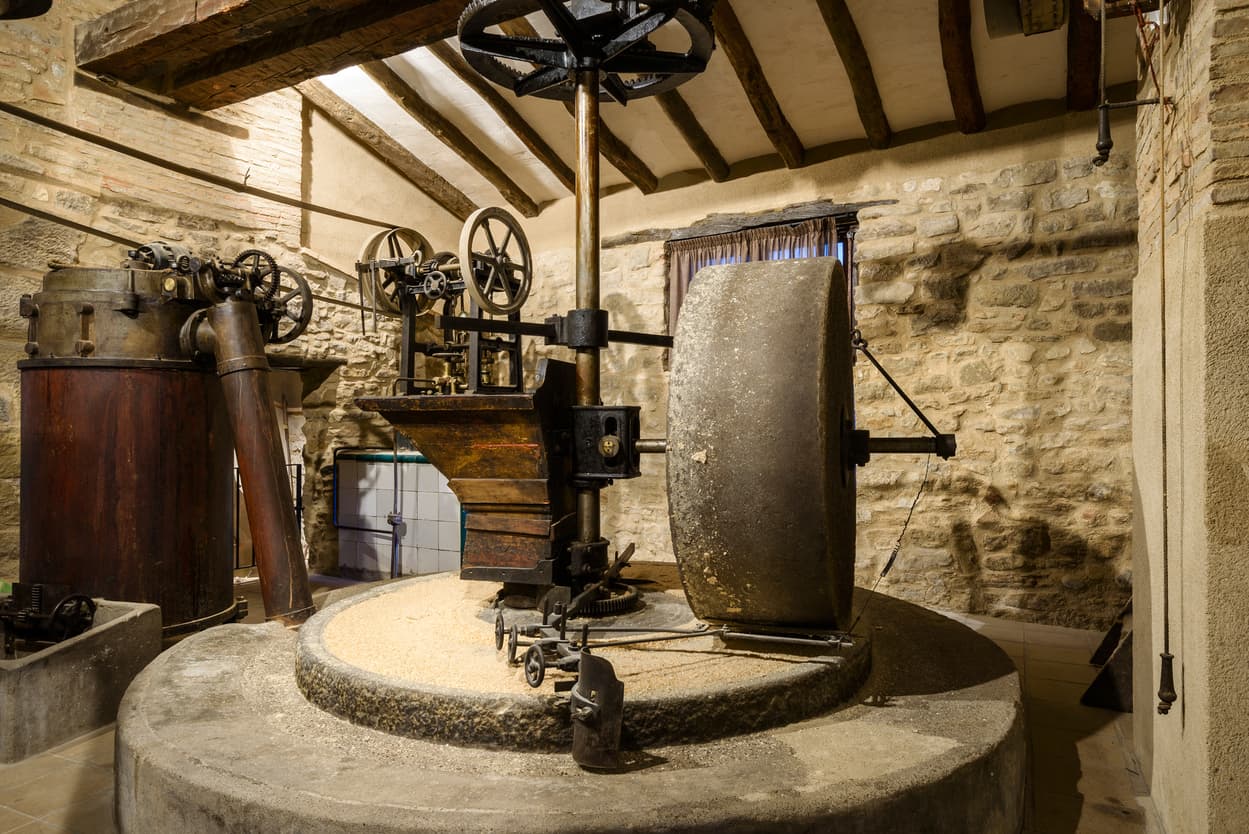
The oil mills that keep the olive oil tradition alive
Oil mills are the facilities where oil is extracted from olives; although many have closed down, six remain today, and a bright future is predicted for them for three reasons: firstly, because both locals and tourists are becoming increasingly aware of the value of Somontano olive oil; the second reason is that there have continued to be families who have remained committed to olive trees and oil even in the most difficult times; and thirdly, because the introduction of the Somontano Olive Oil Designation of Origin may perhaps achieve the same miracle that was achieved with wine in this very region.
Unique olive varieties from the Somontano region
There is an excellent study from 2006 by engineer Javier Viñuales Andreu, which you can read via the link provided below. In his study, Viñuales highlights what makes the olive trees and olive oil of the Somontano region unique: there are four main olive varieties here, five secondary varieties and as many as ten local varieties that you’ll struggle to find elsewhere.
You could spend a whole week sampling different oils and still not manage to try all the traditional varieties the region has to offer. Oil and food lovers… What are you waiting for?
Here, everyone is familiar with names such as alquezrana, negral de Bierge, Alía, Gordal del Somontano, pansereña, royeta de Asque and even one named after the famous tree from which it comes: the Olivera de Nadal. The famous Olivera de Nadal is located in Colungo and is listed among the monumental and unique trees of Aragon.
This spectacular tree is well worth a visit, with a trunk circumference of over 13 metres and a height of more than eight metres. In fact, the ‘Olivera de Nadal’ is a tourist attraction; it is one of the most beloved and well-known trees in the province of Huesca and, quite possibly, one of the oldest too, as it is believed to be a thousand-year-old tree.
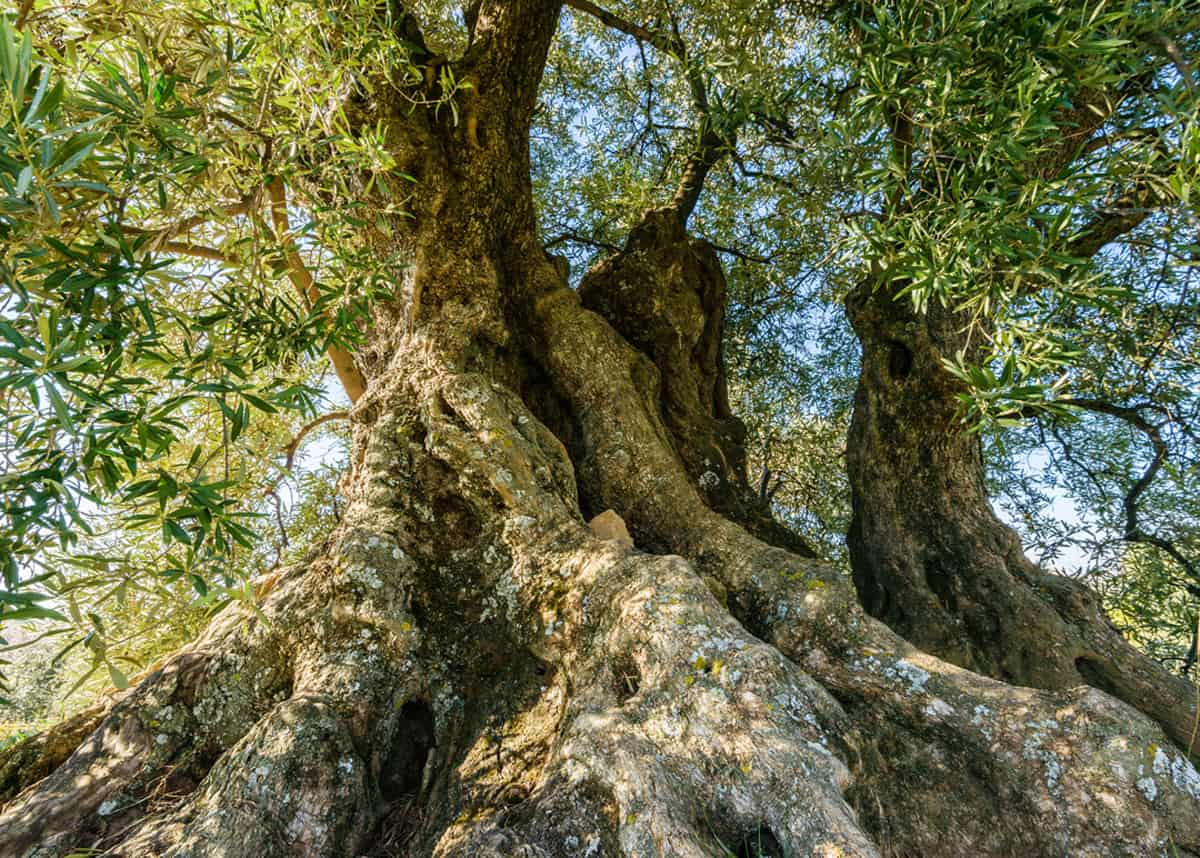
At this point, all I can think of is sitting in the shade of this magnificent tree, taking a loaf of bread out of my rucksack and drizzling it generously with olive oil. All washed down with a little Somontano wine and… Could there be anything better?
Olive-growing tourism in the Sierra de Guara
The previous plan in the shade of the ‘Olivera de Nadal’ is hard to beat, but I’d suggest complementing it with a visit to two special places that are inextricably linked to the olive-growing tradition of the Sierra y los Cañones de Guara Natural Park.
The Buera oil press
The first of these places is the Buera oil mill. A visit to this oil mill, which dates back to the 17th and 18th centuries, is a real journey back in time. As well as the information panels, the real treat is that this press is still in perfect working order and you can see it in action. You’ll also learn about all the varieties of olive trees in the Somontano region, and the traditions and legends associated with the olive tree, the olive, olive oil and oil mills.
Aceites Ferrer: tradition and modernity in Bierge
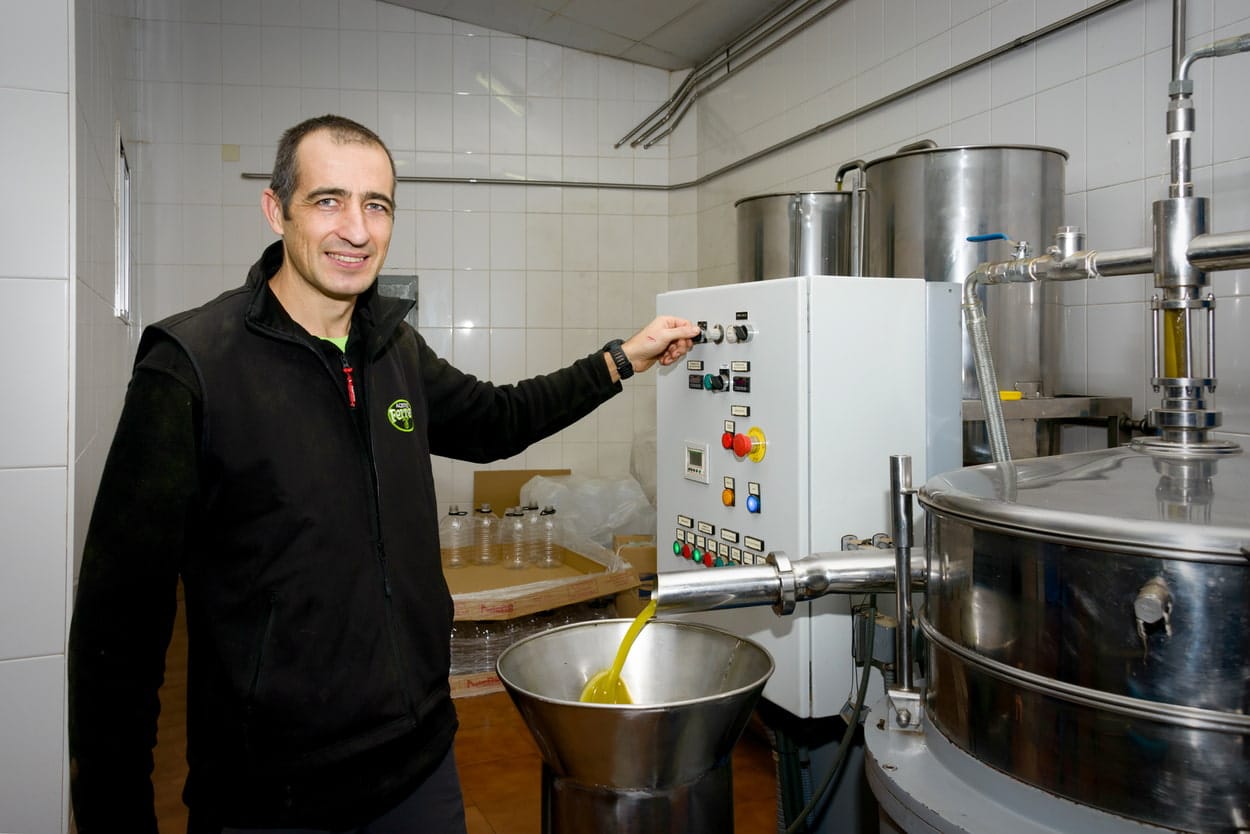
Another place well worth a visit is the Aceites Ferrer oil mill in Bierge. There, you can see the old oil mill, as well as how the oil is extracted today.
If you want to make a great impression by giving oil as a gift, as well as at Ferrer, you’ll find a superb selection of oils at the shop ‘Fornocal Cosas de Aquí’, located in Alquézar.
The olive harvest: an authentic experience
If you’re the sort of person who prefers to go for a stroll in the fresh air without planning your route too much, you should know that between October and December you’re very likely to come across farming families harvesting olives from their centuries-old trees. It’s sure to be a wonderful experience.
Discover olive oil from the Sierra de Guara
Don’t forget to let us know if you’re coming! Use the hashtag #ViveGuara on Instagram and we’d be really grateful.
ESSENTIAL LINKS
The Buera oil press:
https://guara.org/centro-museistico/torno-de-aceite-buera/
Aceites Ferrer:
https://guara.org/otros-servicios/aceites-ferrer/