Skip to content
The rediscovery of the Sierra de Guara
What would the world be like today if others hadn’t ventured into the unknown before us? We probably wouldn’t have seen even a thousandth of what we know today; perhaps the beauty would still be there, hidden from our eyes, and would therefore not exist for us.
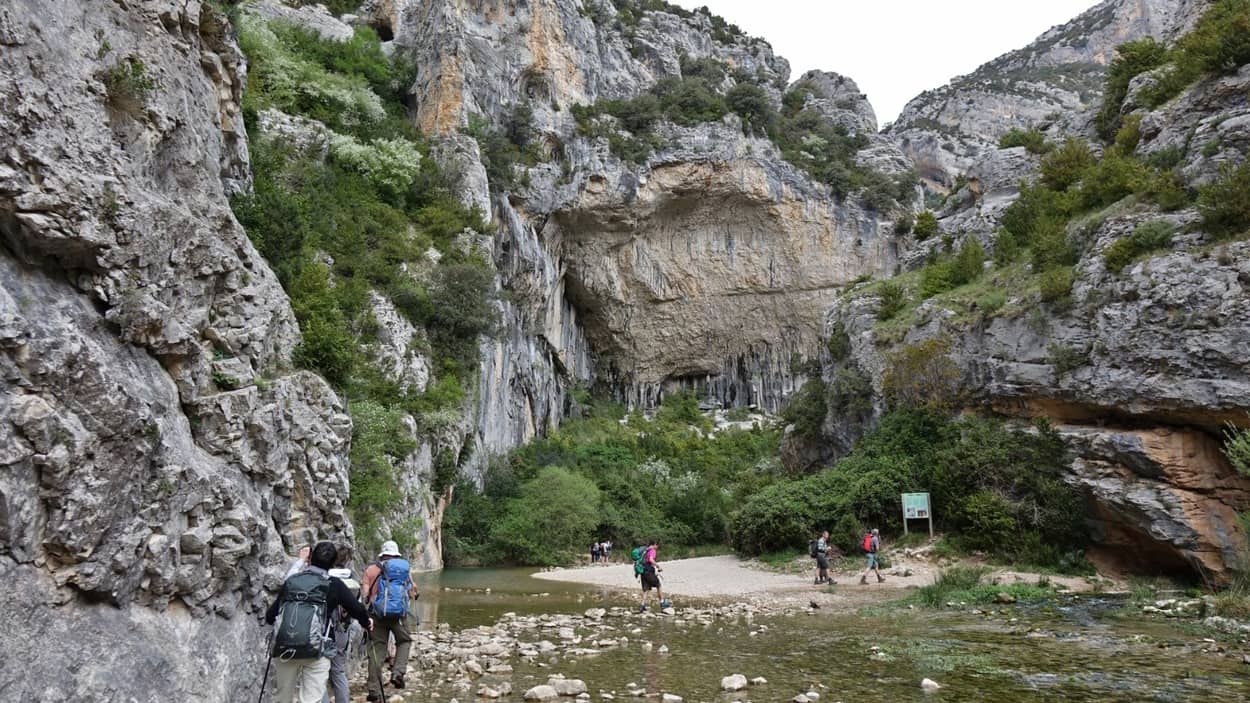
The Sierra de Guara is a rediscovered region – though not for the few inhabitants who remained here in the 1960s, when the majority of the population had moved to the cities. One cannot speak of the ‘discovery’ of a place that has been home to people for tens of thousands of years, but rather of its ‘rediscovery’. And this began, with a French influence, in the early 20th century.
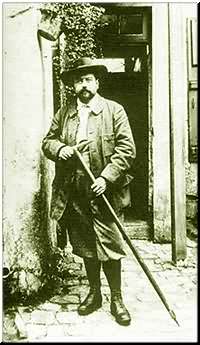
The French rediscoverers of the Sierra de Guara
Lucien Briet was a French photographer and explorer born in 1860 in Toulouse, France, and who died in 1928 in Paris. He is known for his photographic work in Spain, particularly in Aragon and mainly in Huesca.
Briet moved to Spain in the late 19th century to work as an engineer, but his true passion was photography. In 1902, he began work on an ethnographic photography project in the Spanish Pyrenees, and in 1904 he published his first book of photographs, *The Spanish Pyrenees*.
In 1906, Briet was commissioned by the Spanish government to document the historical and artistic monuments of the province of Huesca, in Aragon. Over the following years, he travelled throughout the region, taking photographs of villages, landscapes and monuments. Many of these photographs are now regarded as a valuable record of rural Spain in the early 20th century.
A trip to the Mascún Gorge and the Minvielle Mountains
As for Guara, Briet published ‘Journey to the Mascún Gorge’ in 1905, which served as the foundation upon which more of his compatriots came to discover this region. In the mid-20th century, a surname appeared in the Sierra de Guara that changed everything: Minvielle, in this case Dr Paul Minvielle, who passed on his passion for these lands and waters to his son Pierre. He can be considered the person who kick-started the tourism that has given so much to Guara and continues to do so. He first arrived here in 1950 and was still able to enjoy a well-deserved tribute in 2016, to mark the 25th anniversary of the declaration of the Sierra y los Cañones de Guara Natural Park.
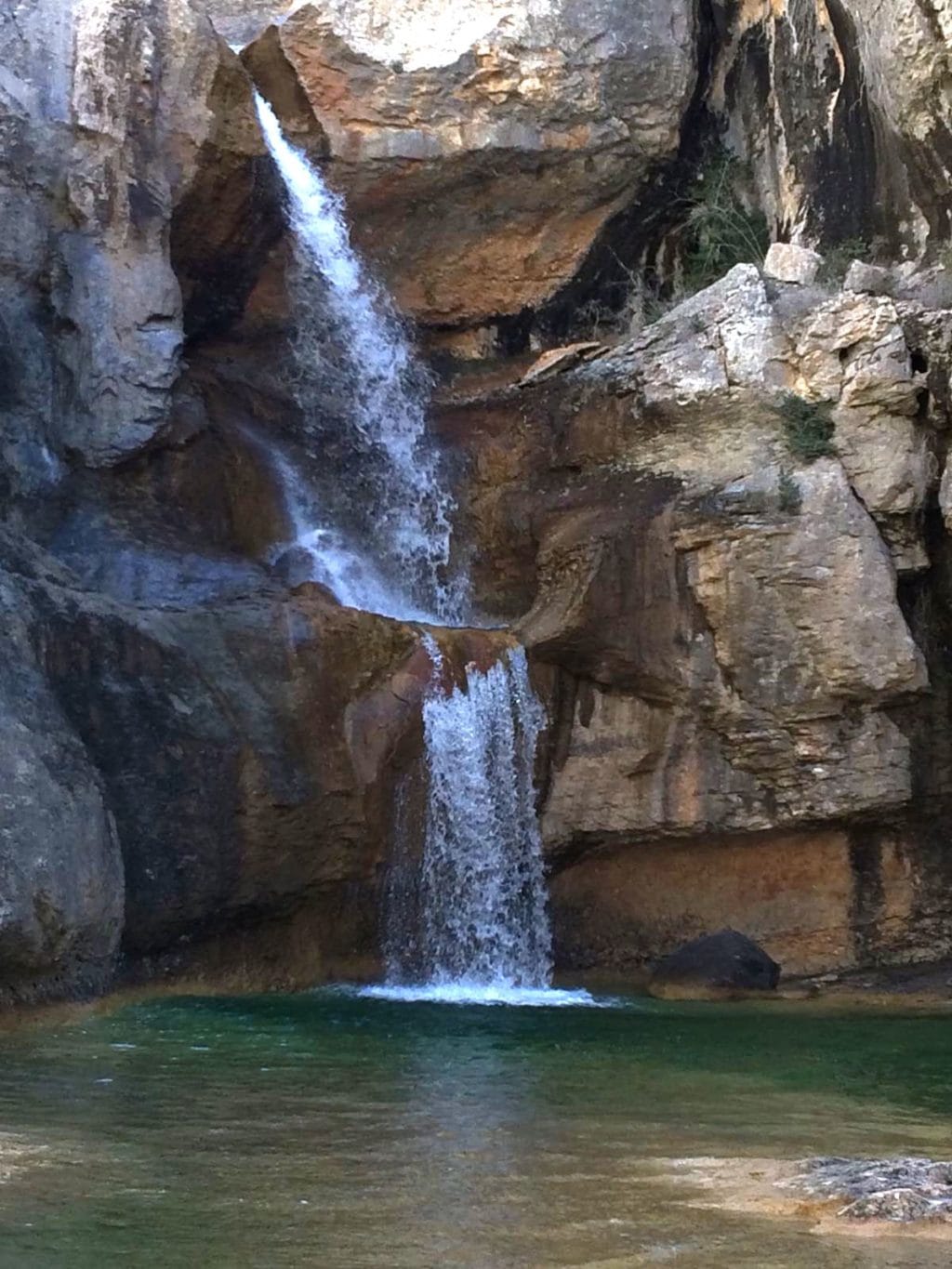
The first guides to venture into the ravines of Guara were also French. One such guide was Christian Abadie, who led hundreds of his compatriots who rediscovered this rural, sparsely populated region—abundant in natural and ethnographic wonders—before the Spanish themselves did.
As for the climbers – the other key factor underpinning the region’s tourism development – special mention must be made of Esteban de Pablo, the first person to climb Cuca Bellosta, paving the way for countless climbers who regard Rodellar as a mecca for the climbing world.
The local pioneers who drove the development of tourism
However, it would be unfair to say that everything came from outside, as without a local community it would not have been possible to develop anything at all. Some of the businesses honoured to mark the 25th anniversary of the Sierra y los Cañones de Guara Natural Park were also pioneers in their own right. These were simple businesses which, nevertheless, served as a foundation for what was to come. It is worth highlighting the role of Casa Florentino, which was the only bar in Rodellar when the first explorers and adventurers began to arrive.
Some of these pioneering businesses gradually disappeared, others changed hands, and others grew thanks to the rise in tourism. Some of those that still remain are Casa Carretero de Bierge, which today’s visitors will be more familiar with as the Hospedería de Guara. El Mesón de Colungo, Casa Pardina, Casa Ferrer de Bierge, the Fonda Narbona in Alquézar, and the pioneering Lecina campsite.
People who left their mark on the recent history of Guara
Pioneers too were all the anonymous residents of the area who welcomed visitors with open arms, knowing or suspecting that this growing wave of visitors would change their way of life forever. Now that the Sierra de Guara Natural Park has been in existence for over three decades, since its designation on 27 December 1990, and the Guara Business Association has also celebrated its 30th anniversary this year, it is worth broadening our focus and remembering the role of other pioneers such as the winemaker Francisco Lalanne, Paco Lacau, with his tireless work promoting the region, Anselmo Labata, of Casa Labata; and Natividad Castillo, of Casa Chata de Alquézar.
Visitors are essential to any tourist destination, but no destination can look to the future without its residents and without the driving force of those who stake their livelihoods and devote all their efforts to ensuring that our visitors have a memorable experience.
Guara looks to the future without forgetting those who laid the foundations for the development of this unique region.
And you, when are you coming to Guara?