Skip to content
The culture of wine in the Somontano
In 1984, this link between the region and its vineyards received official recognition with the creation of the Somontano Protected Designation of Origin, which covers an area that is small in size but huge in character.
Its limestone-rich, poor soils, altitude (350–700 m) and sharp temperature contrasts account for the freshness and balance of its wines. Traditional varieties such as Moristel, Garnacha and Macabeo coexist with varieties that have adapted wonderfully—Cabernet, Merlot, Syrah, Chardonnay and Gewürztraminer—making Somontano one of the most versatile wine regions in the country.
A region renowned for its culinary excellence
The sensory map of the Somontano region was further expanded on 11 November 2025, when the European Union officially registered the new Protected Designation of Origin Aceite del Somontano, a recognition that reinforces the value of the product in Barbastro and the surrounding area.
Its aromatic profile is characterised by intense green fruit notes —olive, grass, leaves, almond, tomato— without any astringency.
This new label adds to the wine’s prestige and coincides with efforts to ensure that Tomate Rosa also has its own quality mark, consolidating the region’s status as a leading name in the agri-food sector.
Wine tour of the Somontano region
Against this backdrop, wine tourism really comes into its own: a trip to Somontano means visiting wineries, strolling through vineyards at the foot of the mountains, discovering futuristic architecture, stepping inside family-run wineries where they still work as they did a century ago… and letting the landscape seep into your glass.
This is where our route begins.
Wineries to discover the Somontano region
We set off from Barbastro, the capital of the Somontano region, where many of the wineries that have made this name famous across the globe are based.
Lalanne: six generations of winemaking tradition
Back in Barbastro, we are welcomed by Lalanne, one of the region’s long-standing estates. Its history began in Bordeaux in 1842 and has continued in Barbastro since 1894, when phylloxera forced the family to cross the Pyrenees with cuttings of Cabernet, Merlot and Chardonnay grafted onto American rootstock.
Six generations on, they are still making wine from their own vineyard, using methods that remain true to those introduced by their ancestors.
LAUS: architecture and nature amidst the vineyards
The landscape changes as we arrive at LAUS. A young winery (2002), nestled amongst ponds and vineyards, where minimalist architecture and nature interact seamlessly.
Its vineyards, situated at an altitude of between 350 and 400 metres, grow on limestone and stony soils, producing well-balanced white, rosé and red wines.
SOMMOS: innovation and cutting-edge architecture
Just nearby stands an extraordinary structure: SOMMOS, internationally recognised as one of the architectural wonders of the wine world.
Its gravity-fed production process, night-time harvesting and meticulous selection of each individual grape reveal a healthy obsession with precision. Concrete tanks, French oak vats, bespoke technology… pure innovation in the heart of Somontano.
Bodegas Fábregas: the living history of Somontano
We move from the future to the past without leaving Barbastro. Bodegas Fábregas, founded in 1883, is a living part of Somontano’s history. From selling wine in bulk to France during the phylloxera epidemic, it went on to play a key role in the creation of the Somontano Designation of Origin in the 1980s.
The winery’s history also reflects the ongoing contribution of women from different generations, who have played a decisive role in its development. Today, the fourth and fifth generations work side by side.
Bodega Pirineos: the value of community
Our route continues to Bodega Pirineos, a prime example of a collective venture: more than 150 winegrowers and some 700 hectares spread across twenty or so villages underpin this project, which was formally established in 1993 on the basis of the regional cooperative founded in 1964.
The winery works to preserve local grape varieties such as Moristel and is involved in projects related to climate change in the Pyrenees.
Viñas del Vero: a leading name in Aragonese wine
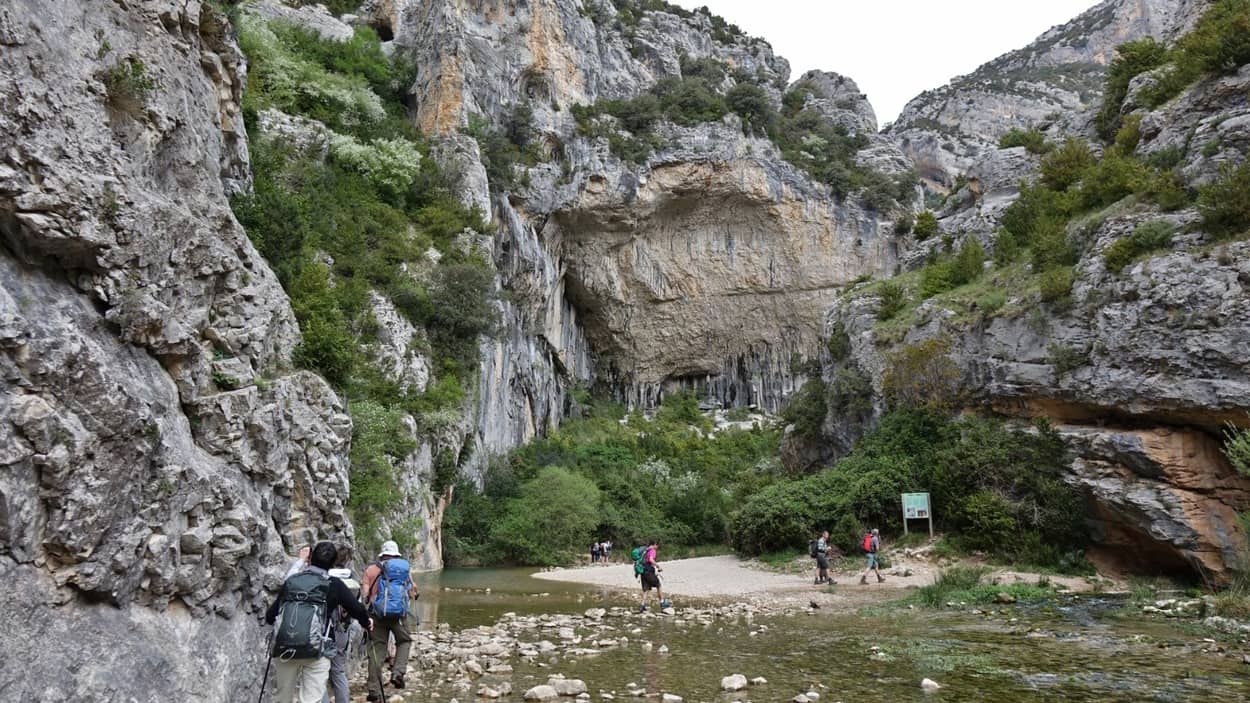
Just a few metres away is Viñas del Vero, founded in 1986 and named after the River Vero, which flows through the Sierra y los Cañones de Guara Natural Park.
With over 1,000 hectares spread across 125 estates and 14 different grape varieties, it has played a key role in putting the Somontano region on the map beyond its borders. Tradition and innovation come together to create balanced, expressive and distinctive wines.
IDRIAS: an expression of the Somontano terroir
Leaving Barbastro behind, the route takes us to Lascellas, where IDRIAS cultivates some 70 hectares of its own vineyards around the winery, organised into traditional vineyards: Alfez, Turmos and Las Planas. Each plot—and its sub-plots—is vinified separately to highlight its individual character.
Limestone soils, altitude (around 550 m) and a climate of contrasts produce wines with character; winemaking intervention is minimal.
Bodegas Abinasa: tradition, wine and gastronomy
In the same town, Bodegas Abinasa is housed in part of one of the oldest inns in Aragon, founded in 1778. Aniseed liqueurs and spirits were produced there long before Ana Lascellas, its most famous wine, was even born.
Today, tradition and modernity coexist alongside a façade that has become an icon thanks to a large-scale mural. As well as wine, they produce vermouth and liqueurs, and the restaurant La Posada rounds off the experience.
An experience to enjoy at your own leisure
The route can end here or continue. The Sierra de Guara invites you to stay a while, to keep exploring, and to let the landscape and the wine set the pace.